Every spring, our communities come alive with plans to improve homes and neighborhoods by planting trees, installing fences, fixing drainage, building decks, and finally tackling those long‑delayed projects. April is also National Safe Digging Month, a timely reminder that one of the most common and dangerous misconceptions is the belief that “It’s just a small project, there’s nothing down there.”
As a senior leader responsible for damage prevention at NiSource, I’ve seen firsthand how quickly an ordinary weekend project can escalate into a serious issue. Most incidents aren’t the result of carelessness. They happen because people underestimate what lies beneath the surface. Natural gas, electric, water, sewer, and communications lines often run much closer to the surface than expected, frequently without visible warning. That’s why safety pros, regulators, and utilities should always stress contacting 811 before digging.
According to a 2026 survey by the Common Ground Alliance (CGA), nearly three in four American homeowners plan to undertake an outdoor digging project this spring, meaning more than 60 million households across the country will be breaking ground. Alarmingly, over 10 million homeowners intend to dig without first contacting 811. This misunderstanding can cause injuries, service disruptions, and expensive repairs, all of which are easily avoidable.
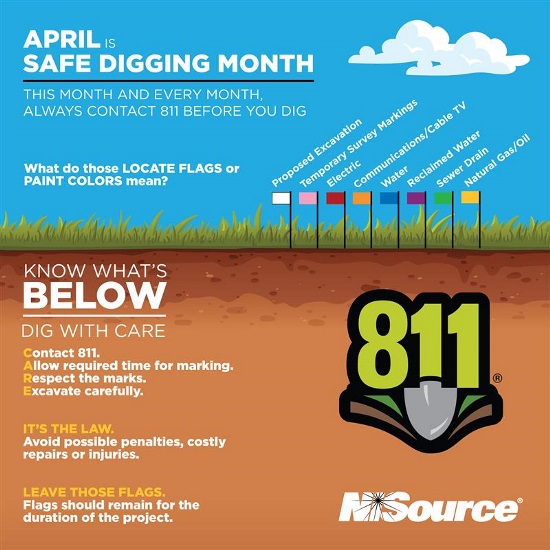
Reaching out to 811 isn’t complicated or a big hassle. It’s a simple safety step that helps protect everyone and the vital services we all depend on. When you make a locate request, you’re connected with your state’s one‑call center. You share where you plan to dig, and the center notifies local utilities. Professional locators then mark the approximate locations of underground lines using paint or flags, following a standardized color system used nationwide. Those markings allow you to plan your project safely and avoid dangerous mistakes.
Why does this matter? Because the consequences of hitting an underground line can be severe. Beyond temporary outages, these incidents can cause injuries, disrupt neighborhoods, impact emergency services, and create long‑lasting consequences for families and businesses. National safety data consistently shows that most underground utility damage occurs when digging begins without a locate request.
Utilities like NIPSCO and Columbia Gas prioritize safety, investing heavily in education, outreach, and infrastructure to protect customers and communities. But damage prevention is a shared responsibility. Industry organizations such as the CGA, along with federal partners like the Pipeline and Hazardous Materials Safety Administration (PHMSA), continue to reinforce the importance of contacting 811 because it works, and it’s the law!
If you’re planning a project, keep these four basics in mind:
First: Contact 811 2-3 business days before you plan to dig, whether you’re a homeowner planting shrubs or a contractor trenching for a larger build. See the chart below for your state’s one-call and when to reach out.
| State One-Call | When to Contact 811 | Tolerance Zone |
Indiana | Indiana811.org | At least two full business days | 24 inches |
Kentucky | Kentucky811.org | At least two full working days | 24 inches |
Maryland | MissUtility.net | At least three business days | 18 inches |
Ohio | OUPS.org | At least two business days | 18 inches |
Pennsylvania | PAOneCall.org | At least three business days | 18 inches |
Virginia | VA811.com | At least three business days | 24 inches |
Second: Allow time for utilities to respond and for the site to be marked. Don’t assume “no flags” means “no lines.”
Third: Respect the marks and dig carefully around them. If your project is too close to markings, adjust your plan.
Fourth: Excavate carefully, using hand tools if you are within 18 or 24 inches of the painted lines, known as the tolerance zone. Check the chart above to make sure you know your state’s zone.
This National Safe Digging Month, let’s treat 811 the same way we treat buckling a seatbelt, a simple habit that protects lives and property. Making a locate request before you dig is the safest choice you can make, helping safeguard essential services and the people who rely on them.
When it comes to what’s underground, what you don’t know can hurt you and others. Let’s look out for each other, not just in April, but all year long.
 Brad Tutunjian
Sr. Vice President Gas Operations, NiSource Inc.